
When I first started paying more attention to my hair, I thought I needed a lot of products. I had shampoo, conditioner, hair oil, a serum, a hair mask and a few other things that I had bought because someone online said they were useful. The funny part was that I still had days when my hair looked dry, tangled or simply difficult to manage.
After trying different products, I slowly understood that having more products does not always mean having a better hair routine. Some products became regular parts of my routine, while others just stayed in the cupboard.
For me, choosing hair products became much easier once I stopped looking for one product that could fix everything. Shampoo has one job, conditioner has another, and a serum or heat protectant can be useful for a different reason. What matters most is whether the product suits your scalp, hair type and everyday routine.
If you are also confused by all the shampoos, conditioners, oils, masks and serums available today, starting with a few basic products can make things much simpler.
What Hair Products Do You Really Need?

Before buying anything, I like to ask myself a simple question: “Will I actually use this?”
A basic daily hair care routine does not need a huge collection. For many people, a few products may be enough:
- Shampoo for cleansing the scalp
- Conditioner for the lengths and ends
- Hair oil if it suits your routine
- Hair serum for managing frizz and improving smoothness
- Heat protectant if you regularly use styling tools
- A hair mask when your hair needs some extra conditioning
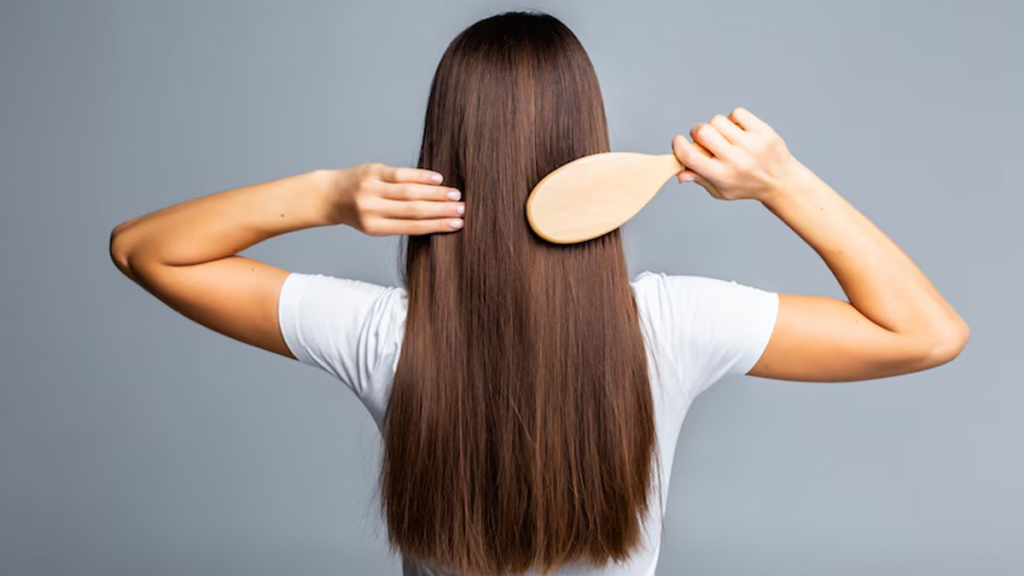
- A suitable comb or brush for gentle detangling
Of course, everyone’s routine can be different. Someone with very short hair may not need the same products as someone with long, thick hair.
I think it makes more sense to build the routine slowly instead of buying everything at once.
1. A Shampoo That Suits Your Scalp
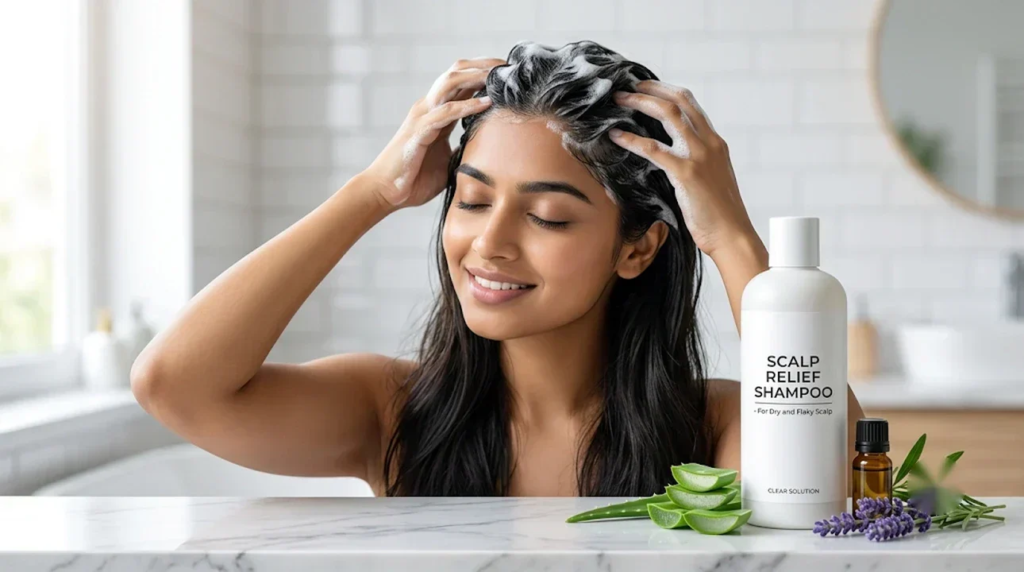
Shampoo is probably the first hair product most of us buy, but choosing one can still be confusing.
I used to look at words like “smooth,” “strong,” or “repair” on the bottle and assume that was enough. Now I pay more attention to my scalp.
If my scalp feels oily after a short time, I would rather use a shampoo that cleans it comfortably without leaving a heavy feeling. If the scalp feels dry or uncomfortable, a gentler formula may make more sense.
The important thing is to remember that shampoo is mainly for cleansing the scalp. You do not have to scrub the entire length of your hair aggressively.
What I Look For in a Shampoo
I usually consider:
- How my scalp feels after washing
- Whether the hair feels excessively dry afterward
- Whether the product causes irritation
- How frequently I actually need to wash my hair
- Whether the shampoo suits my current hair condition
A shampoo that works for your friend may not work the same way for you. Hair care is surprisingly personal.
2. A Good Everyday Conditioner Hair Products
If there is one product I would not like to skip, it is conditioner.
After shampooing, my hair can sometimes feel rough, especially around the ends. Conditioner makes it much easier to comb and manage.
I usually apply it from around the middle of the hair towards the ends. I do not put a large amount on the scalp because that can make the roots feel heavy.
You do not need to leave conditioner on for a very long time unless the product specifically says so. Following the instructions on the bottle is enough.
A conditioner is especially useful if your hair gets tangled easily or feels dry after washing.
3. Hair Oil for Pre-Wash Care
Hair oil is a very familiar product in Indian households. Almost everyone seems to have a favourite oil or a childhood memory connected with oiling hair.
For me, oiling is more of a pre-wash step than something I want to leave on my hair all day.
A small amount can be massaged gently onto the scalp and applied through the lengths if needed. I prefer not to soak my hair in oil because too much can become difficult to wash out.
Different oils have different textures, and some people may prefer lighter oils while others like richer ones. There is no need to use an oil just because it is popular.
If your scalp becomes itchy or uncomfortable after oiling, it may simply not suit you. In that case, there is no reason to force the habit.
4. Hair Serum for Everyday Smoothness
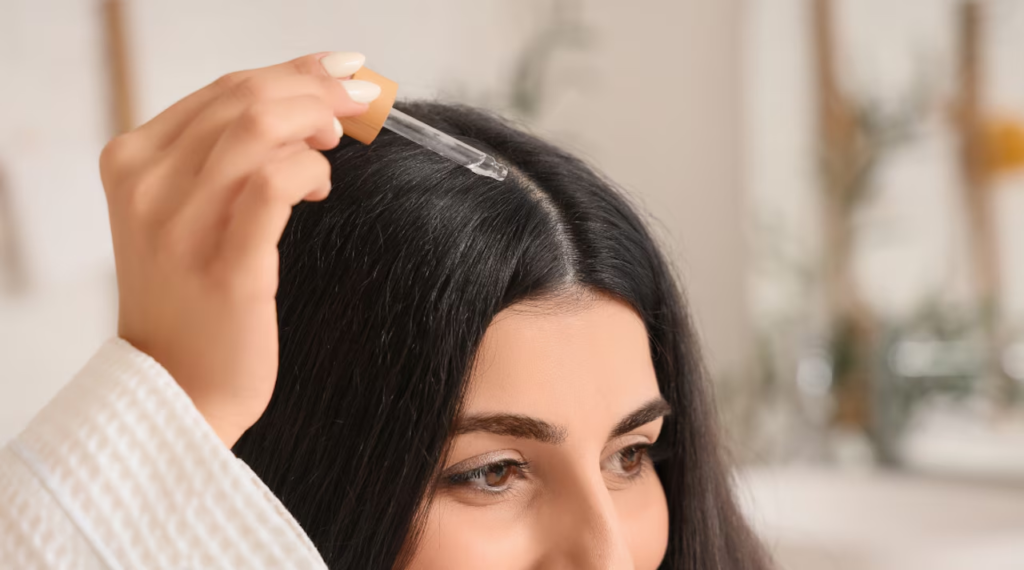
A hair serum can be one of those products that seems unnecessary until you actually find one that works well for your hair.
I usually think of serum as a finishing product. If my hair looks frizzy or the ends feel rough after drying, a small amount can make it look more polished and easier to manage.
The key word here is small.
Using too much serum can make the hair look greasy or weighed down, especially if your hair is fine. I prefer starting with a tiny amount and adding more only if needed.
Most serums are applied to the lengths and ends rather than directly onto the scalp.
When I Would Use a Hair Serum
A serum can be useful:
- After washing and drying the hair
- When the ends look dry
- Before going out when you want a smoother appearance
- When frizz becomes difficult to manage
- After styling, depending on the product
It is not something I feel the need to apply heavily every day. A little can be enough.
5. Heat Protectant for Styling Days Hair Products
If you use a straightener, curling iron or blow dryer regularly, I would consider a heat protectant an important product to keep around.
Heat styling can be convenient, especially when you are getting ready for an event or simply want a particular hairstyle. But repeated high heat can contribute to hair damage.
A heat protectant is not permission to use extreme heat every day. I see it more as one part of reducing unnecessary damage when heat styling is actually needed.
I would apply it according to the product directions and make sure the hair is prepared properly before using the styling tool.
On normal days, there is no need to use a straightener simply because it is sitting on the dressing table.
6. A Hair Mask for Extra Conditioning
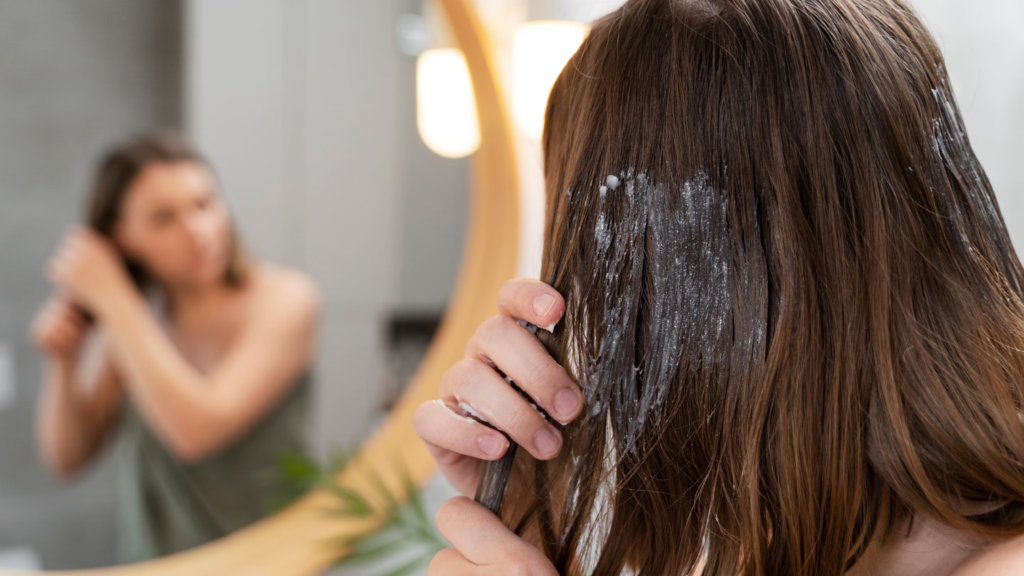
A hair mask is another product that I used to think was essential for everyone.
Now I see it differently.
Some people enjoy using a mask regularly, while others may be perfectly comfortable with shampoo and conditioner. It depends on how the hair feels and what kind of routine you already have.
When my hair feels particularly dry or rough, a conditioning mask can be a nice addition to the routine.
I would not use a huge amount just because the product is called a “mask.” More product does not automatically mean better results.
Follow the instructions and concentrate on the lengths if that is what the product recommends.
7. Leave-In Conditioner
Leave-in conditioner can be useful when regular conditioner is not enough for managing your hair after washing.
It is especially worth considering if your hair becomes tangled, dry or difficult to comb.
I like the idea of leave-in products because you do not rinse them out immediately. They can make the hair feel easier to handle after washing.
However, you need to be careful with the amount. Applying too much can leave the hair feeling heavy.
Start with a small quantity and see how your hair responds.
8. A Gentle Detangling Comb
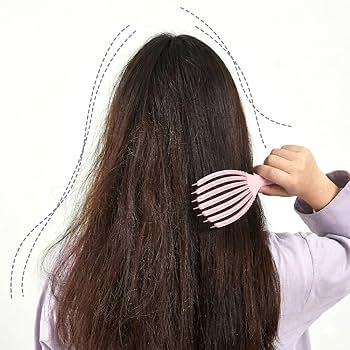
Hair products get most of the attention, but the tool you use on your hair matters too.
A wide-tooth comb can be useful for detangling, especially when the hair is damp. I prefer starting at the ends and working upwards rather than pulling a comb from the roots through a large knot.
This small change can make detangling much less stressful.
You also do not need to brush your hair constantly. If it already looks neat and feels comfortable, there is no reason to keep combing it again and again.
9. A Good Hair Towel or Soft T-Shirt
This may sound like a small detail, but the way you dry your hair matters.
I used to rub my hair with a normal towel because it was quick. Later, I became more careful and started gently squeezing the water out instead.
A soft towel or clean T-shirt can be useful for removing excess water without rough rubbing.
You do not need a special expensive hair towel to follow this habit. The main point is to avoid aggressively rubbing wet hair.
10. A Comfortable Hair Tie
Hair ties are something we use without thinking.
I have noticed that very tight hair ties can become uncomfortable when worn for hours. Sometimes you only realise how tight the hairstyle was after removing it.
I prefer keeping a few comfortable options around, such as soft scrunchies or looser ties, depending on the hairstyle.
Changing the position of the ponytail or wearing a loose braid from time to time can also help avoid constantly pulling the same areas.
How I Would Build a Simple Hair Product Routine
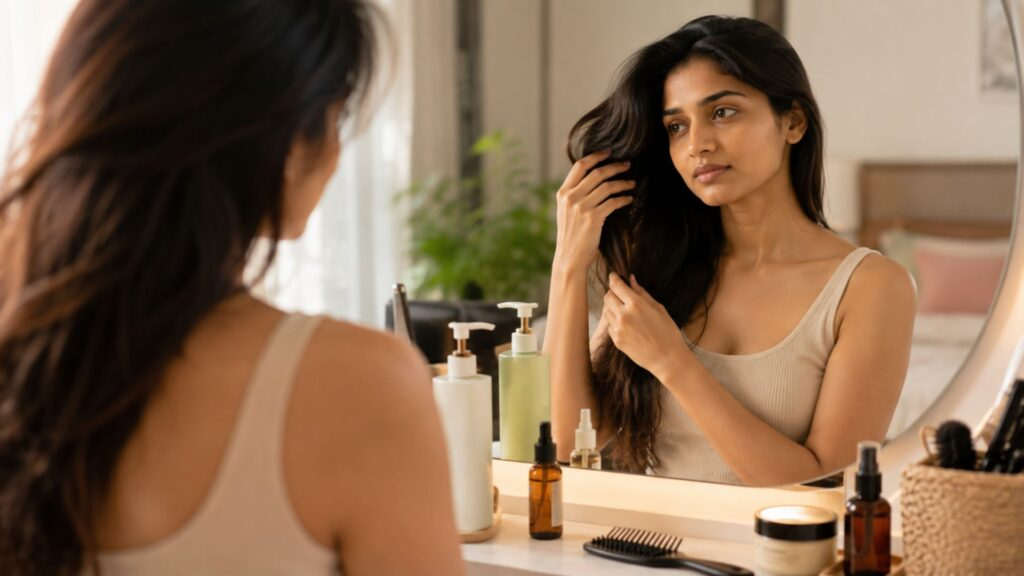
If I were starting my hair care routine again, I would not buy ten products on the same day.
I would start with the basics.
Step 1: Shampoo
Choose a shampoo that suits your scalp and use it when your hair actually needs washing.
Step 2: Conditioner
Apply conditioner to the lengths and ends after shampooing.
Step 3: Serum
Once the hair is dry or almost dry, use a small amount of serum if you need help with frizz or rough-looking ends.
Step 4: Oil
If oiling suits your hair and scalp, use it as a pre-wash step when you feel it is useful.
Step 5: Heat Protectant
Keep this for days when you are using a dryer, straightener or curling tool.
Step 6: Hair Mask
Add a mask only if your hair feels like it needs extra conditioning.
That is already enough for a practical routine. There is no need to add another product simply because someone online has recommended it.
How to Choose Hair Products for Your Hair Type
This is where I think many people get confused.
Instead of asking, “Which product is the best?” I would ask, “Which product makes sense for my hair?”
If Your Hair Feels Dry
Look for products that provide conditioning and help the hair feel softer. A suitable conditioner, leave-in product or hair mask may be useful.
If Your Scalp Gets Oily
Focus more on scalp cleansing and avoid putting heavy oils or rich styling products directly on the roots.
If Your Hair Gets Frizzy
A conditioner and a small amount of suitable serum may help with manageability. Avoid constantly brushing dry hair if that makes the frizz worse.
If Your Hair Gets Tangled Easily
Conditioner, leave-in products and gentle detangling can make a noticeable difference.
If You Use Heat Often
Keep a heat protectant in your routine and try to reduce unnecessary high-heat styling.
The goal is not to put your hair into one perfect category. Hair can change, and your routine can change with it.
Mistakes I Would Avoid When Buying Hair Products
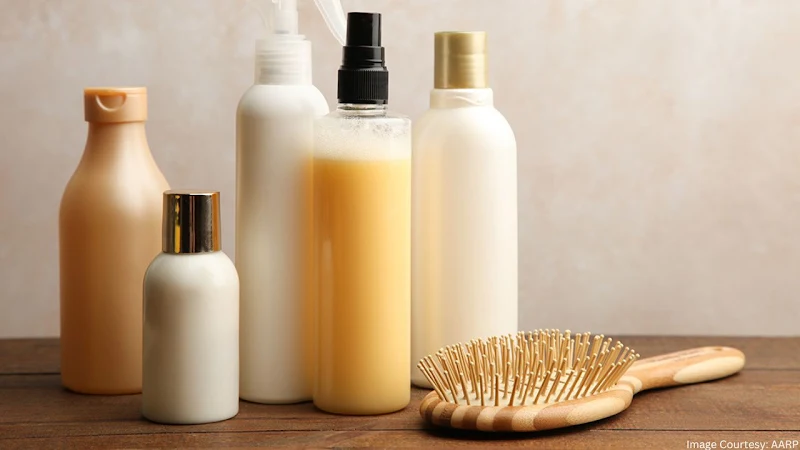
There are a few things I would definitely be more careful about now.
Buying Hair Products at Once
When you see a complete hair care routine online, it can be tempting to buy the entire collection.
I would not do that.
Start with one or two products, see how your hair responds, and then decide whether you actually need something else.
Following Every Viral Hair Products Recommendation
A product going viral does not mean it will suit everyone.
Someone may have completely different hair texture, scalp condition, styling habits and climate from you.
Using Too Much Hair Products
More shampoo, more serum or more oil does not automatically mean better results.
I have found that starting with a small amount is usually easier. You can always add more if necessary.
Changing Hair Products Too Quickly
If you change your shampoo, conditioner, serum and oil at the same time, it becomes difficult to know what is working.
I prefer changing one thing at a time.
Ignoring Your Scalp
We often focus on the hair that we can see in the mirror and forget about the scalp.
If your scalp is constantly itchy, painful, irritated or unusually flaky, do not keep covering the problem with cosmetic products. A dermatologist can help identify what is actually happening.
Do Expensive Hair Products Work Better?
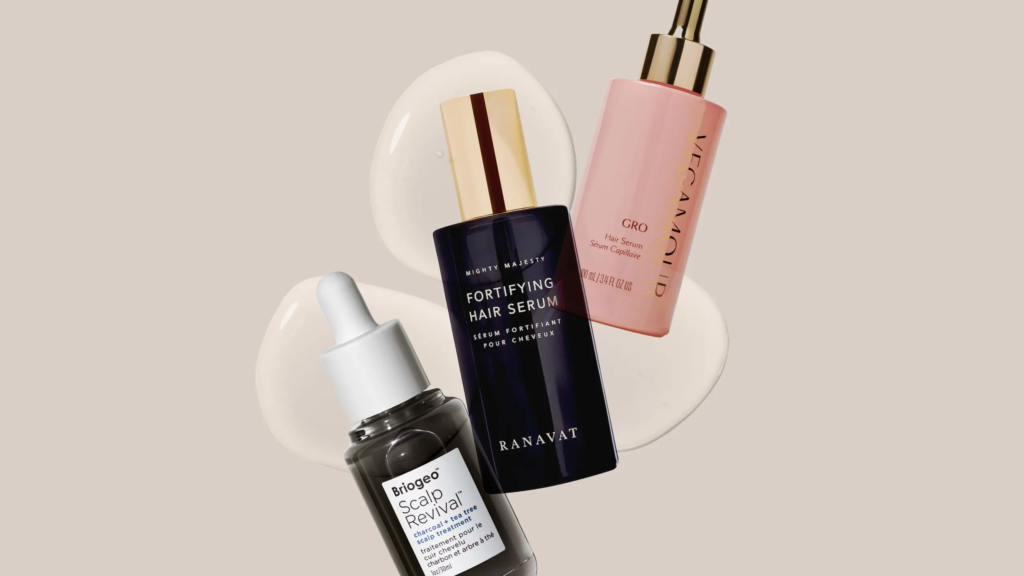
Not necessarily.
I have used products at different price points, and I do not think a high price automatically means that something will suit your hair.
Sometimes a simple conditioner at a reasonable price works better for me than a much more expensive product.
Instead of looking only at the price, I would consider the ingredients, product purpose, how your hair responds and whether you will actually use it regularly.
A product sitting unopened on your shelf is not helping your hair, no matter how expensive it was.
My Final Thoughts on Choosing Hair Products
I used to think that finding the perfect hair product would solve most of my hair problems. Now I look at it differently.
A good hair routine is more about choosing a few useful products and using them properly than collecting every new launch.
For everyday care, I would start with a suitable shampoo and conditioner. If needed, add a hair serum, oil, heat protectant or mask based on what your hair actually needs.
There is no reason to copy someone else’s entire shelf of products. Your scalp, hair texture, lifestyle and even the weather around you can affect what feels comfortable.
And honestly, I think the best hair care products are the ones you can use consistently without making your routine feel like another chore.
You may need some trial and error before finding what works. That is completely normal. Pay attention to how your hair feels after using something, make changes slowly, and do not let every viral recommendation convince you that your current routine is suddenly wrong.
A simple routine that suits your hair is worth much more than a bathroom full of products you rarely use.