

Your alarm blares at 6:30 AM. Mindfulness and Meditation Before your eyes are even fully open, your hand reaches for the phone on your nightstand. Within ninety seconds, you’re looking at urgent Slack messages, three unread emails from your boss, a string of family group chat texts, and a headline about something chaotic happening halfway across the world.
Your heart rate ticks up just a little bit. Your chest tightens. You haven’t even put your feet on the floor yet, but your brain is already running at full sprint toward a mountain of things you need to handle today, tomorrow, and next week.
By the time mid-afternoon rolls around, you’ve drunk three cups of coffee, answered dozens of pings, context-switched fifty times, and swallowed lunch while typing with one hand. You feel scattered, tired, and irritable, but if someone asks how you’re doing, you automatically reply: “Good! Just crazy busy.”
This is what life on autopilot looks like. It isn’t because you’re doing something wrong or lacking willpower; it is simply how modern life is built. Our environments are explicitly engineered to capture, hold, and monetize our attention every single second of the day.
When people hear about mindfulness or meditation as a solution, they often picture a perfectly serene monk on a mountain peak, or an influencer sitting in a spotless room on a $200 velvet cushion, chanting in front of a ring light. It feels unrealistic, performative, and entirely disconnected from the reality of a messy, noisy life.
The truth is much simpler and far more grounded. You don’t need a quiet house, a cushion, incense, or an empty brain to practice mindfulness. You just need a tiny bit of curiosity and a willingness to pause for a few seconds right in the middle of your ordinary day.
What Is the Real Difference Between Mindfulness and Meditation?

People mix these two words up constantly, using them as if they mean the exact same thing. While they work together closely, understanding the distinction makes your effort much more effective.
Mindfulness is a way of being in the world
Mindfulness isn’t an event you calendar. It is simply the quality of being awake to what is happening right now, without trying to change it, fix it, or judge yourself for it.
When you are eating a slice of toast and actually tasting the butter and crunch instead of reading news on your phone, that is mindfulness. When you are standing in a long line at the grocery store and you notice your shoulders bunched up around your ears and gently let them drop, that is mindfulness. You can be mindful while scrubbing a frying pan, waiting for an elevator, sitting in traffic, or folding laundry.
Meditation is the dedicated gym session
If mindfulness is being fit throughout your day, meditation is the specific workout that builds that muscle.
It is a short, deliberate period where you step away from your tasks—even if only for three to five minutes—and train your brain to pay attention to a chosen anchor. That anchor might be the natural rise and fall of your stomach as you breathe, the cool air at the tip of your nose, or the sound of rain outside your window.
Think of it this way: Meditation is where you practice coming back to the present moment in a controlled setting. Mindfulness is taking that same skill out into the wild when work gets overwhelming or family life gets noisy.
4 Easy, Everyday Practices You Can Use Immediately
You do not need to rearrange your life, buy special gear, or clear an hour on your calendar. Here are four practical habits you can weave directly into the day you already have planned.
1. Mindfulness and Meditation The 5-4-3-2-1 Grounding Method
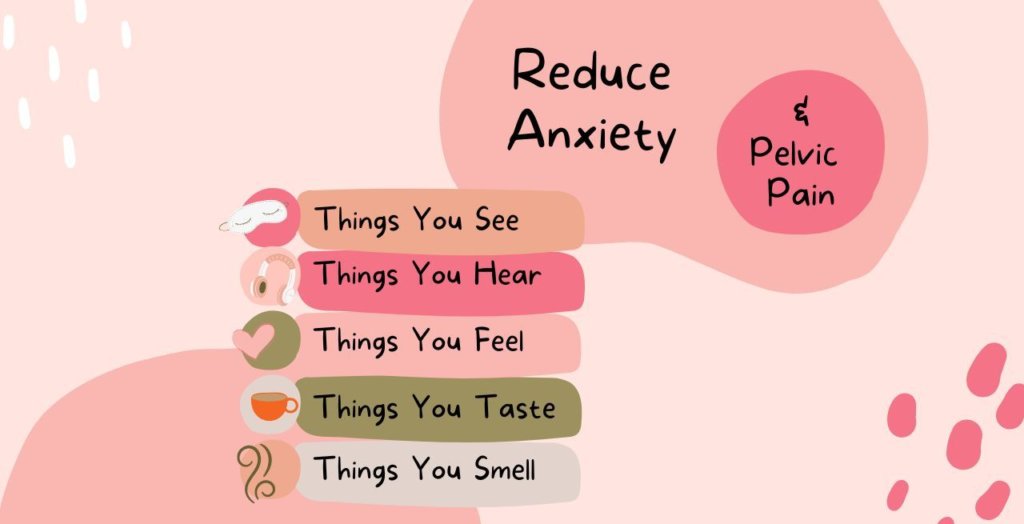
When anxiety surges, your mind essentially launches into time travel. It sprints into the future, inventing scary scenarios about things that haven’t happened yet, or it loops over something embarrassing or frustrating that happened yesterday.
This simple sensory game acts like an emergency brake for an overactive brain. It forces your mind to exit the imaginary world of your thoughts and reconnect with the physical room you’re sitting in.
Stop where you are, take one full breath, look around, and notice:
- 5 things you can see: Look for subtle details you usually ignore—a scuff mark on the wall, the way light hits your desk, a pen, your own knuckles, or a leaf outside.
- 4 things you can physically feel: Focus on real textures—the weight of your heels resting on the floor, the roughness of your denim jeans, your back against the chair, or cool air blowing from an AC vent.
- 3 things you can hear: Tune into low-frequency background sounds—the hum of the refrigerator motor, distant traffic, or a fan blowing.
- 2 things you can smell: Try to catch subtle scents—freshly printed paper, coffee grounds, or soap on your hands.
- 1 thing you can taste: Notice whatever flavor remains in your mouth—the tail end of your morning tea or toothpaste.
2. Single-Tasking Your First Warm Drink

Most of us treat our morning coffee or tea as mere fuel to get through the early emails. We sip it unconsciously while reading stressful headlines or planning our day, starting our morning in a state of quiet panic.
Tomorrow, try giving your first five sips your complete attention.
Wrap both hands around the mug and feel the warmth sinking into your fingers.
Inhale the steam deeply before taking a sip. Notice the heat, the rich flavor, and the feeling as you swallow. When your brain inevitably jumps ahead to your 9:00 AM meeting, notice the distraction gently, let it go, and bring your attention right back to the warmth of the mug.
3. Box Breathing for Immediate Calm
When stress triggers your body’s fight-or-flight system, your breathing automatically shifts into short, shallow chest gasps. This tells your brain that an actual physical threat is present, creating a feedback loop of anxiety.
Box breathing—used regularly by emergency room doctors, tactical response teams, and professional athletes—breaks that loop by manually forcing your heart rate to slow down.
       Inhale (4 seconds)
     ┌────────────────────┐
     │                    │
Hold │                    │ Hold
(4s) │                    │ (4s)
     │                    │
     └────────────────────┘
       Exhale (4 seconds)
- Inhale slowly through your nose, letting your belly expand, for a count of 4.
- Hold that air gently inside your lungs for a count of 4.
- Exhale smoothly through your mouth for a count of 4.
- Hold your lungs empty at the bottom for a count of 4.
- Repeat this four-sided square cycle 3 to 4 times in a row.
4. Micro-Walking Mindfulness and Meditation
You don’t need a quiet trail in the woods to practice walking mindfully. The short hallway between your desk and the bathroom, or the sidewalk on your way to pick up lunch, works just as well.
Put your phone inside your pocket. As you walk, pay attention to the physical mechanics of movement—the heel hitting the pavement, the shift of weight to the toes, the push-off, and the swing of your arms. Feel the air moving against your skin. If your mind drifts into a work problem, simply anchor your awareness back to the soles of your feet touching the floor with every step.
What Most Beginners Get Wrong (And How to Fix It)
Most people who try Mindfulness and Meditation quit within their first week because they hold unrealistic expectations about how the human brain actually works.
Myth 1: “I can’t stop thinking, so I’m just bad at this.”

This is the single most common reason people give up. They sit down, close their eyes, and thirty seconds later realize they’re thinking about dinner, a line from a movie, or a bill they forgot to pay. They think: “Well, my brain is too busy. I guess meditation isn’t for me.”
Here is the truth: Your brain is supposed to produce thoughts. That is its job, just like your heart’s job is to pump blood.
Mindfulness and Meditation isn’t about stopping thoughts; it’s about changing your relationship with them. Instead of getting swept away by a thought like a leaf caught in a fast river, you stand on the riverbank and simply watch the thought float by.
Every single time you catch yourself distracted and choose to gently bring your focus back to your breath, you have successfully performed one “rep” of mental training. The distraction isn’t a failure—noticing the distraction is the entire point.
Myth 2: Mindfulness and Meditation Trying to sit for 30 minutes right away
If you decided to start running today, you wouldn’t sign up for a full marathon this afternoon. You’d start with a short jog around the block.
Sitting still with your thoughts for twenty or thirty minutes when you aren’t used to it is uncomfortable and frustrating. Start ridiculously small: two minutes every morning. Make it so simple that it feels impossible to fail. Once two minutes feels like a comfortable habit, add a single minute to your timer.
Myth 3: Mindfulness and Meditation Expecting an immediate feeling of zen
Some days, your two-minute sit will feel calm and peaceful. Other days, your brain will feel like a cage full of hyperactive monkeys, and you’ll feel restless the entire time.
Both sessions are equally valuable. The goal of meditation isn’t to feel blissfully relaxed while you sit; it’s to build the mental awareness that helps you stay calm three hours later when your day gets chaotic.
A Dead-Simple 5-Minute Daily Sitting Routine


If you want to try a formal sitting practice today, here is a straightforward, zero-fluff way to do it.
- Find a comfortable seat: Sit on a kitchen chair with your feet flat on the floor, or sit on a stool or cushion. Keep your back comfortably straight—upright, but not stiff or rigid like a soldier on parade. Let your hands rest naturally in your lap.
- Softening your gaze: Either close your eyes gently or keep them open with a soft, relaxed gaze directed at a spot on the floor three feet in front of you.
- Locate your anchor: Bring your attention to the physical sensation of breathing. Find where you feel it most clearly—it might be the cool air entering your nostrils, your chest moving, or your lower stomach expanding and deflating.
- Follow the movement: Watch the full arc of each breath from beginning to end. Don’t try to breathe in any special way; just let your body find its natural rhythm.
- Handle distractions with kindness: When a memory, task, or physical itch pulls your attention away, don’t get annoyed. Simply acknowledge it (“Ah, thinking”), let it be, and escort your attention back to your breath.
- Transition out smoothly: When your timer goes off, don’t jump straight up. Open your eyes slowly, sit still for ten seconds, and notice how your body feels before moving on with your day.
Why Even Two Minutes a Day Changes Things
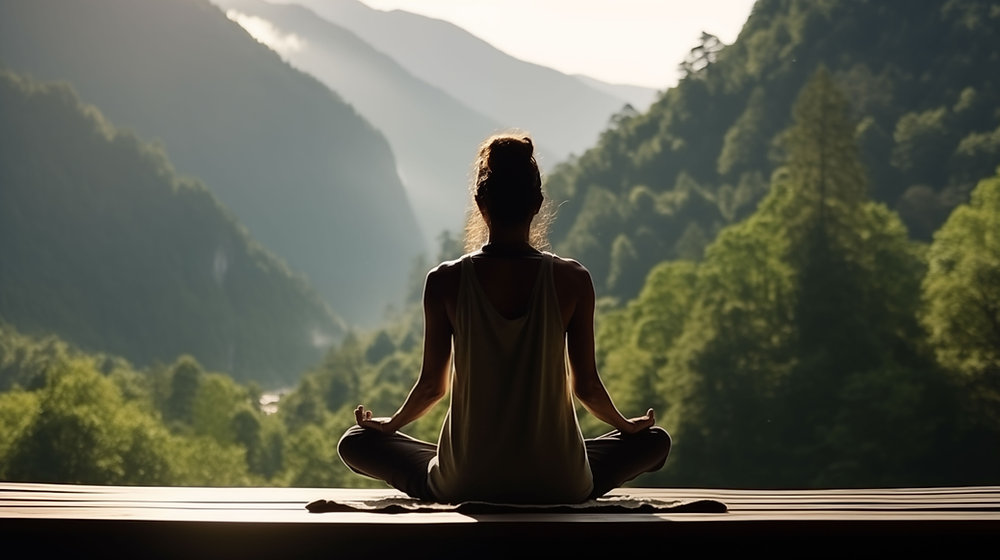
Practicing Mindfulness and Meditation doesn’t mean you will never feel angry, worried, or overwhelmed again. You are still human, and life will still throw stressful situations your way.
What mindfulness actually gives you is a tiny sliver of space.
Without Mindfulness and Meditation, something happens (an annoying email arrives) and you instantly react (you type a snappy reply or feel your stomach knot up). There is zero gap between the trigger and your response.
In that brief pause, you get to catch your breath. You get to notice: “Okay, my chest feels tight and I’m feeling defensive.” And instead of reacting impulsively on autopilot, you gain the freedom to choose how you want to respond.
Start small. Take one deep, intentional breath right now before you move on to your next tab. That single breath is where everything starts.
Frequently Asked Questions
1. What is mindfulness in simple words?
Mindfulness means paying attention to what is happening in the present instead of automatically getting caught up in thoughts about the past or future.
2. How long should a beginner meditate?
A beginner can start with a few minutes. A five-minute session is a simple way to become familiar with meditation without making it feel like a large commitment.
3. Can mindfulness be practised without meditation?
Yes. You can practise mindfulness while eating, walking, drinking tea, cleaning, showering, studying, working, or talking with someone. The important part is paying attention to what you are doing.
4. What should I do when my mind keeps wandering during meditation?
Notice that your attention has moved somewhere else and bring it back to your chosen focus. Getting distracted is a normal part of meditation.
5. Is meditation a replacement for professional mental health support?
No. Meditation can be part of a general wellbeing routine, but it should not replace appropriate professional support for serious or ongoing mental health difficulties.